
Experiencing several changes in health condition is quite normal in pregnancy
This 9-month journey is full of anxiety as well as excitement. This blog focuses on Gestational Diabetes in pregnancy and its causes and symptoms. Here, we also include the diagnosis and treatment of this type of temporary diabetes.
What is Gestational Diabetes?
An imbalance of blood sugar levels occurs in pregnancy, especially during the second and third trimesters. Gestational Diabetes in pregnancy indicates a condition in which blood sugar levels become higher due to fluctuations in the secretion of hormones. This health complication does not show distinct symptoms, so monitoring is necessary during the pregnancy.
What are the symptoms of Gestational Diabetes?
In most cases, no distinct symptoms can not be observed to detect gestational diabetes in the course of pregnancy. Here in the following points, some common symptoms are discussed:
- Difficulty in vision: Gestational diabetes may cause blurred vision and other difficulties in eyesight. The balance of fluid in the eyes can be affected by the fluctuation of sugar levels in the body.
- Fatigue: Lack of energy may be an indication of high blood sugar. Tiredness can usually be seen in pregnancy.
- Frequent hunger: Excess hunger is a usual sign of diabetes in pregnancy.
- Dehydration: High blood sugar can cause dehydration. You may feel dryness in your mouth as well as frequent thirst.
- Infection: Infection is one of the common symptoms of developing diabetes. Our immune system is affected by high sugar.
What are the risk factors for gestational diabetes?
Many aspects need to be considered for enhancing the risk of gestational diabetes. The factors are discussed in the following points:
- Excess bodyweight: Having a proper weight before and during pregnancy is a crucial factor in pregnancy. Regulating the sugar level in the blood properly becomes difficult due to the high BMI. This overweight increases the chances of diabetes.
- Genetic factors: If your family members or close relatives have type 2 diabetes, then there is a high possibility of diabetes.
- Complication in previous pregnancy: If you had some complications in a previous pregnancy related to diabetes, there is a higher chance of having diabetes. A thorough observation is essential in such cases.
- Polycystic Ovary Syndrome (PCOS): PCOS can leave a significant impact on blood sugar level in the course of pregnancy. In this condition a proper treatment is needed.
How is Gestational Diabetes in pregnancy diagnosed?
To diagnose gestational diabetes in a proper way, some blood tests are recommended here. The necessary blood tests are described in the following points:
- GCT(Glucose Challenge Test)
This screening test is effective in checking the function of insulin to balance the sugar level in the blood. In this test, glucose solution is given, and after one hour, a sample of blood is taken to test the sugar level. This test is recommended not to confirm gestational diabetes but to ensure the potential risk of this type of health complication.
- OGTT(Oral Glucose Tolerance Test)
An Oral Glucose Tolerance Test is essential to confirm gestational diabetes. In this test, 8 -8-hour fast is required. At first, a blood sample is collected, then a glucose solution is given to the patient. After that, the blood samples are collected at frequent intervals to monitor the changes in sugar level with time.
How is Gestational Diabetes treated?
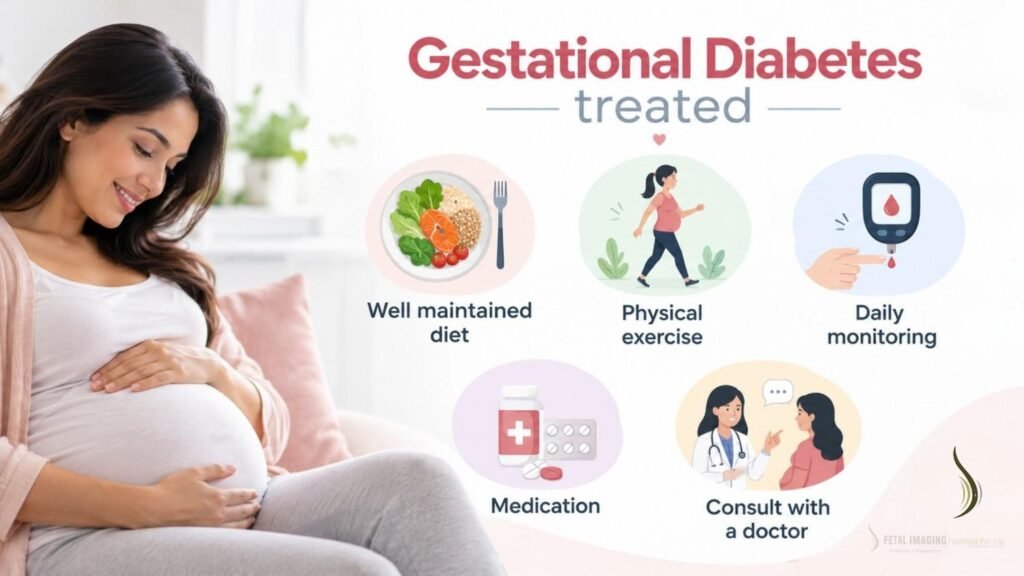
Keeping the blood sugar at the proper mark is important for ensuring a hassle-free pregnancy. The treatment is recommended here in the following points:
Well maintained diet
Taking a well maintained diet is important to avoid any health complications. You need to take meals frequently in a limited amount. Your meals must contain the necessary nutrients in the right proportion. You should take foods containing high fiber, like whole grains. A customised diet plan from a nutritionist needs to be followed.
Physical exercise
Daily exercise helps to enhance the effectiveness of insulin in our body. A balanced as well as stable blood sugar can be achieved through swimming, walking, and yoga. Your doctor will suggest the most suitable exercise as per your health condition.
Daily monitoring
You need to track your blood sugar on a regular basis. Using a glucose meter is beneficial to monitor the sugar level before and after taking meals. This monitoring is essential for the detection of issues. If any imbalance is noticed, you can make changes in your diet.
Medication
In most cases, eating balanced food is not enough to have a stable sugar level. medicines as well as injections for insulin are required to cope with the health condition. After observing your condition the doctor will suggest the proper instructions and best medicines.
Consult with a doctor
You need to visit your doctor frequently to ensure a safe prenatal journey. Your doctor will suggest that you have an ultrasound and blood tests for the detection of potential complications at an early stage.
Different types of health challenges can be noticed, especially in high-risk pregnancies. You can avoid all the complications by consulting with an expert gynecologist at Fetal Imaging Institute, the renowned fetal care clinic in Rathtala Balgharia, Kolkata. Our specialists are equipped with advanced technologies to offer high-quality care as well as services. Here we offer cutting-edge surgical technology and the latest diagnostic equipment to monitor the condition of you and your baby in the womb.
Conclusion
Gestational Diabetes in pregnancy can come with several unexpected, and harmful health complications especially in pregnancy. Through proper diagnosis, and treatment, it can be avoided. Overweight, PCOS, and a family history of diabetes are the significant factors for this type of diabetes. Though there are no specific symptoms to detect this diabetes but tiredness, dehydration, and infections are the common issues caused by this health condition. GCT and OGTT are effective methods to test gestational diabetes. Daily Workout, a well maintained diet, and daily monitoring are essential for staying away from diabetes. It is necessary to contact an experienced gynecologist who suggests necessary tests to assess your condition and prescribe the right medicines.
Frequently Asked Questions
1. What foods avoid to prevent gestational diabetes?
A: You need to stay away from packaged food,food items containing sweeteners, and potatoes.
2. How to manage gestational diabetes at home?
A: Deep sleep, consuming adequate water, and juicy fruits, are recommended to stay away from health issues.
3. Can gestational diabetes affect the baby after birth?
A: Yes, your baby may face health issues even after birth. Your baby may have breathing difficulties, low blood sugar and jaundice. Glucose therapy can be beneficial.
4. Can stress cause gestational diabetes?
A: Stress is harmful in gestational diabetes. The cortisol hormone is secreted because of stress that makes release of glucose. This is how the sugar level increases in the blood.
Follow us on
- Facebook: www.facebook.com/FIMINSTKOLKATA
- Instagram: www.instagram.com/fetalimaginginstituteofficial
- YouTube: www.youtube.com/@FetalImagingInstituteoffical
Visit at